For many clients, group therapy is a more practical treatment option than one-on-one therapy sessions. The financial cost of group therapy is substantially less than individual therapy, and research shows it can be just as effective. However, group therapy also presents unique challenges, and is often more difficult to administer. That’s why professionals need a solid plan of action when using group therapy to treat clients.
In recent years, acceptance and commitment therapy (ACT) has gained immense popularity. Based in values, mindfulness, and committed action, this therapeutic model has proven successful in treating a number of psychiatric disorders, including anxiety, depression, stress, addictions, eating disorders, trauma, and relationship problems. However, despite the popularity of this modality, there are very limited resources available when it comes to applying ACT in a group setting.
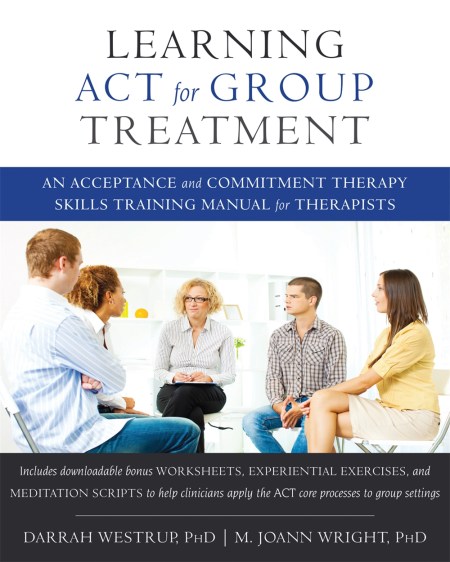
Learning ACT for Group Treatment is a comprehensive, powerful manual for clinicians, therapists, and counselors looking to implement ACT in group therapy with clients. A composite of stand-alone sessions, the book provides detailed explanations of each of the core ACT processes, printable worksheets, tips on group session formatting, and a wide range of activities that foster willingness, cooperation, and connection among participants.
In the book, professionals will see how the benefits of ACT can actually be enhanced in a group setting, particularly because there are more participants for ACT exercises. This leads to increased accountability among clients, and allows them to play both an active role and the role of the observer during treatment. The book also includes concrete tips for applying ACT to a number of treatment scenarios, including inpatient group therapy, partial hospitalization programs, outpatient programs, and community self-help groups.
With detailed exercises and group activities, this book has everything therapists need to start using ACT in group settings right away.
In recent years, acceptance and commitment therapy (ACT) has gained immense popularity. Based in values, mindfulness, and committed action, this therapeutic model has proven successful in treating a number of psychiatric disorders, including anxiety, depression, stress, addictions, eating disorders, trauma, and relationship problems. However, despite the popularity of this modality, there are very limited resources available when it comes to applying ACT in a group setting.
Learning ACT for Group Treatment is a comprehensive, powerful manual for clinicians, therapists, and counselors looking to implement ACT in group therapy with clients. A composite of stand-alone sessions, the book provides detailed explanations of each of the core ACT processes, printable worksheets, tips on group session formatting, and a wide range of activities that foster willingness, cooperation, and connection among participants.
In the book, professionals will see how the benefits of ACT can actually be enhanced in a group setting, particularly because there are more participants for ACT exercises. This leads to increased accountability among clients, and allows them to play both an active role and the role of the observer during treatment. The book also includes concrete tips for applying ACT to a number of treatment scenarios, including inpatient group therapy, partial hospitalization programs, outpatient programs, and community self-help groups.
With detailed exercises and group activities, this book has everything therapists need to start using ACT in group settings right away.
Reviews
"This long-awaited book finally provides therapists with the guidance they needed to do ACT in groups. Darrah Westrup and Joann Wright have turned their scientific expertise and clinical wisdom into a wonderfully written text that covers all the key aspects of the psychological flexibility model while addressing the typical pitfalls and advantages of doing ACT in this context. This is an essential read for all therapists doing ACT in groups!" —Matthieu Villatte, PhD, coauthor of Mastering the Clinical Conversation
"Finally! The scientific literature on acceptance and commitment therapy (ACT) is heavily based on group intervention methods, but through nearly three decades of such studies, no book has been available to walk clinicians through the myriad choice points, barriers, and opportunities presented by ACT in groups. No more. This wonderful and readable volume walks through every relevant area and issue in a way that is wise, evidence-based, and clear. How can you organize an open membership ACT group? What if a group member just wants to tell stories? In area after area and issue after issue, Westrup and Wright have skillfully done the heavy lifting for you. If you're doing ACT in groups, you now have a much easier job: buy the book, read it, and use it." —Steven C. Hayes, PhD, Foundation Professor of Psychology at the University of Nevada, and cofounder of ACT
"Life's too short to beat around the bush, so I'm going to be blunt: if you do ACT with groups, or if you wish to start doing so, you need this book. Chockablock full of wisdom and experience from experts in the field, it's not just an optional extra; it's an absolute essential. If you want to help groups of people to discover ACT, and leave them glowing with a sense of vitality and fulfilment, then be smart about it: allow Westrup and Wright to light the way for you." —Russ Harris, author of The Happiness Trap and ACT Made Simple