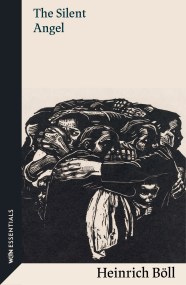
Set in Cologne in the immediate aftermath of the Second World War, The Silent Angel is one of the most important works of so-called Trümmerliteratur (the literature of the ruins).
On May 8, 1945, German soldier and deserter Hans Schnitzler returns to a city reduced to rubble, without papers and haunted by survival. Carrying the coat of a fallen comrade – who died in his place -Hans seeks out the dead man’s widow, unaware that the coat conceals a will that will soon draw him into a dangerous intrigue. As he wanders through the bombed streets, Hans meets a woman living alone in a near-ruined apartment. She has lost her baby in an air raid; Hans has lost his wife.
Bound by grief and dislocation, the two strangers find refuge together like castaways amid the wreckage. At first they envy the dead and struggle to imagine a future, but slowly, against the backdrop of moral uncertainty and physical devastation, they begin to rediscover love, hope, and the possibility of a life worth living in a shattered world.
A W&N Essential
On May 8, 1945, German soldier and deserter Hans Schnitzler returns to a city reduced to rubble, without papers and haunted by survival. Carrying the coat of a fallen comrade – who died in his place -Hans seeks out the dead man’s widow, unaware that the coat conceals a will that will soon draw him into a dangerous intrigue. As he wanders through the bombed streets, Hans meets a woman living alone in a near-ruined apartment. She has lost her baby in an air raid; Hans has lost his wife.
Bound by grief and dislocation, the two strangers find refuge together like castaways amid the wreckage. At first they envy the dead and struggle to imagine a future, but slowly, against the backdrop of moral uncertainty and physical devastation, they begin to rediscover love, hope, and the possibility of a life worth living in a shattered world.
A W&N Essential
Reviews
A beautiful, urgent novel . . . as perfect as anything Boll ever wrote
So begins what was Nobel-winner Boll's first novel, a touching love story and trenchant study of moral decay . . . lyrical, spare and somanbulisitic
Boll creates a brittle, intense love between two people who are bewildered that they still are capable of love
This excellent novel is a story of love among the ruins
We are in the hands of a master craftsman
Amazing and most eloquent . . . this gripping novella reads like a sketch for a masterpiece
His first and possibly his finest novel
A work of art . . . In it the major themes of Böll's career - marriage, religion and abuses of power that undermine both - are handled with a poetic authority rare to first-time novelists